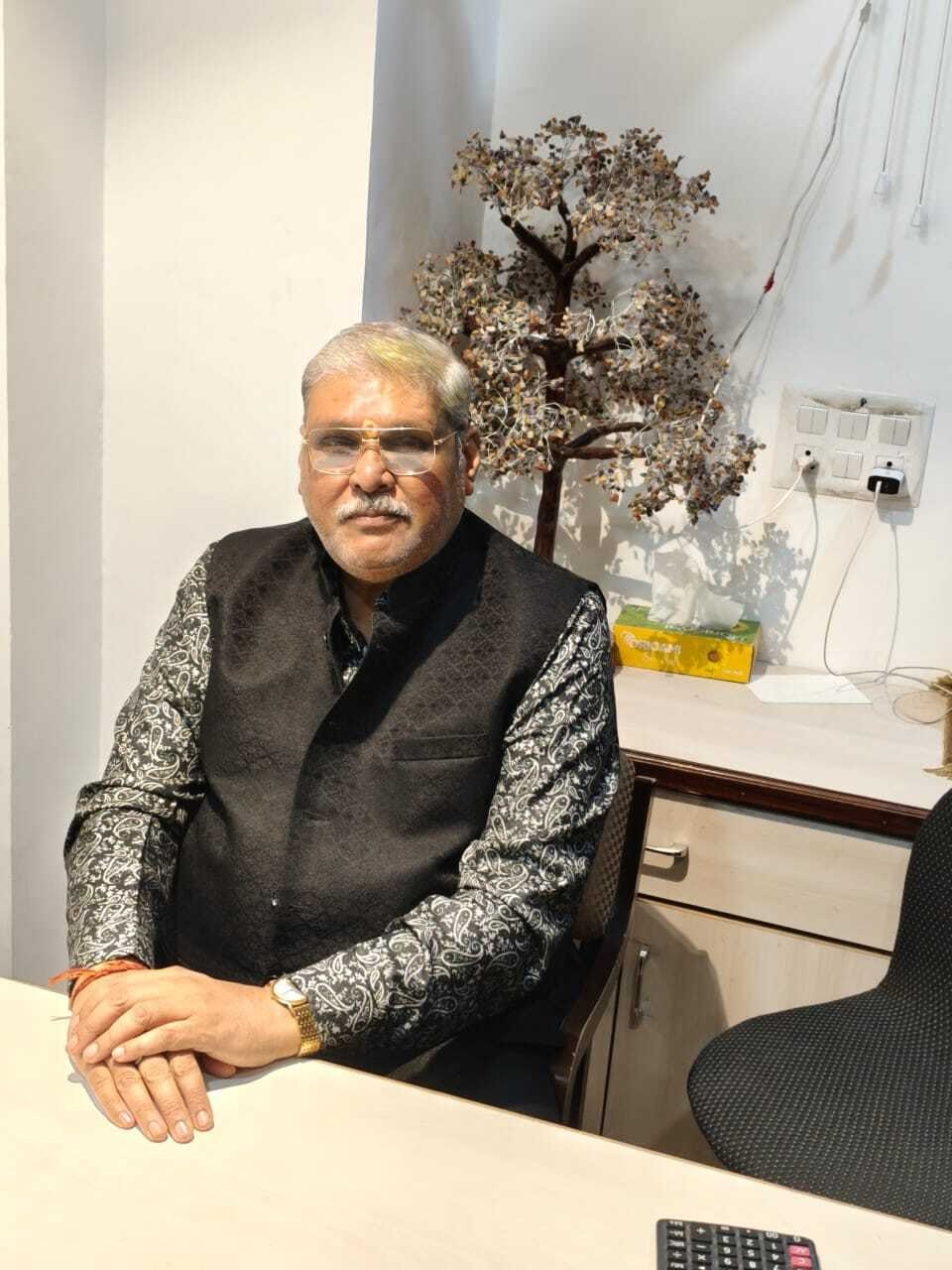
Why One Chart Cannot Choose For Everyone
Many apps and websites pick a gemstone from your date of birth alone, or from a ready-made chart. That is quick, but two people born on the same day are not the same person. The same stone can suit one of them and not the other.
The question to ask is not which stone is lucky, but which stone suits you, and whether you need one at all.
How Sachin Jain Chooses Your Stone
Sachin Jain starts from you, not from a table:
- Your face shows your nature, your strengths and what holds you back.
- Your palms show which qualities are strong and which need support. Each raised pad (mount) is linked with a traditional stone: below the index finger with pukhraj, below the middle finger with neelam, below the ring finger with manik and below the little finger with panna.
- Your date of birth is checked before any stone is named. The time and place of birth are not needed.
What You Learn In The Consultation
If a stone will help, you are told exactly which one, which finger to wear it on, which metal to set it in, what weight to buy and when to start wearing it. You are also told which stones to avoid. If a stone could do more harm than good for you, Sachin Jain says so plainly.
The Nine Main Gemstones
The nine traditional stones (navratna) are manik (ruby), moti (pearl), moonga (red coral), panna (emerald), pukhraj (yellow sapphire), heera (diamond), neelam (blue sapphire), gomed (hessonite) and lehsunia (cat's eye). Each one suits some people and not others.
Precious Stone Or Upratna?
The main stones can be costly. An upratna, a semi-precious substitute stone, can sometimes be worn instead, when it suits you and your budget. A small genuine stone is better than a large one that is fake or does not suit you.
How To Wear Your Gemstone
A few simple rules make a big difference:
- Wear it on the finger and in the metal you were told, so the stone touches your skin if that was advised.
- Buy by weight in carats and ask the seller to convert from ratti if needed.
- With a strong stone such as neelam, a short trial of a few days is often advised before you wear it for good.
- Tell your consultant about every stone you already wear, because some stones are not worn together.
How To Avoid A Fake Or Treated Stone
There is no reliable way to test a gemstone at home. Instead, buy from a seller you trust and always ask for a report from an independent gem testing laboratory. The report should say whether the stone is natural, treated (for example heated or glass-filled) or lab-made. Check the report number on the laboratory's own website before you pay.
Warning Signs When Buying A Stone
Be careful if you meet any of these:
- Pressure to buy today, or a price that is only valid now.
- A promise of guaranteed results.
- Fear: being told something bad will happen if you do not wear a stone.
- No independent laboratory certificate, or a refusal to let you check it.
- The person who recommends the stone insists that you buy it from them.
If A Stone Is Not Suiting You
Take it off and get it checked. A stone may not suit you, may be worn on the wrong finger, or may clash with another stone you wear. A gemstone is not medicine, so for any health problem, please see a doctor.
Get A Clear Answer For Yourself
In a gemstone consultation, Sachin Jain reads your face and palms, checks your date of birth and suggests the right gemstone for betterment in your life, with clear wearing instructions. The fee is ₹1,100 per sitting, and you are never asked to buy a stone from us.